What Are SaaS Sales? Models, Metrics, and How to Succeed
Learn what are SaaS sales, the saas sales process, common business models, key metrics like MRR and churn, and practical tips to succeed.
Introduction to SaaS Sales
SaaS sales are how companies sell subscription-based software hosted in the cloud. Instead of a one-time license, customers usually pay monthly or yearly. The buyer often cares about ongoing value, not just the upfront product.
So, what is SaaS in sales, in plain terms? It is the practice of selling access to a service. This changes how teams pitch, how they measure success, and how they support customers after purchase.
If you are asking what are SaaS sales and why they feel different, the answer is simple. Cloud software is easier to start and harder to keep. Retention depends on the product experience and the help you provide.
- Subscription model: recurring revenue tied to continued usage
- Hosted software: updates ship continuously, not in “next versions”
- Ongoing relationship: onboarding and support affect churn

Understanding the SaaS Sales Process
The saas sales process starts with finding the right problem to solve. A consultative approach matters because buyers evaluate workflows, not features. Many SaaS products also integrate with other tools, which adds complexity.
In most B2B sales motions, you will run discovery calls, then demos. After that, procurement, security review, and legal steps can extend the cycle. For larger deals, stakeholders also include IT and finance.
Then comes the part many teams underestimate: saas onboarding experience. If onboarding is weak, users churn even after signing. Strong customer service and customer success management reduce that risk.
- Discovery: map goals, pain points, and current tools
- Demo: show workflows, not a feature list
- Evaluation: trial, pilot, or proof of value with real tasks
- Close: align on pricing, terms, and success plan
- Onboarding: guide setup, first value, and adoption milestones

Different SaaS Sales Models
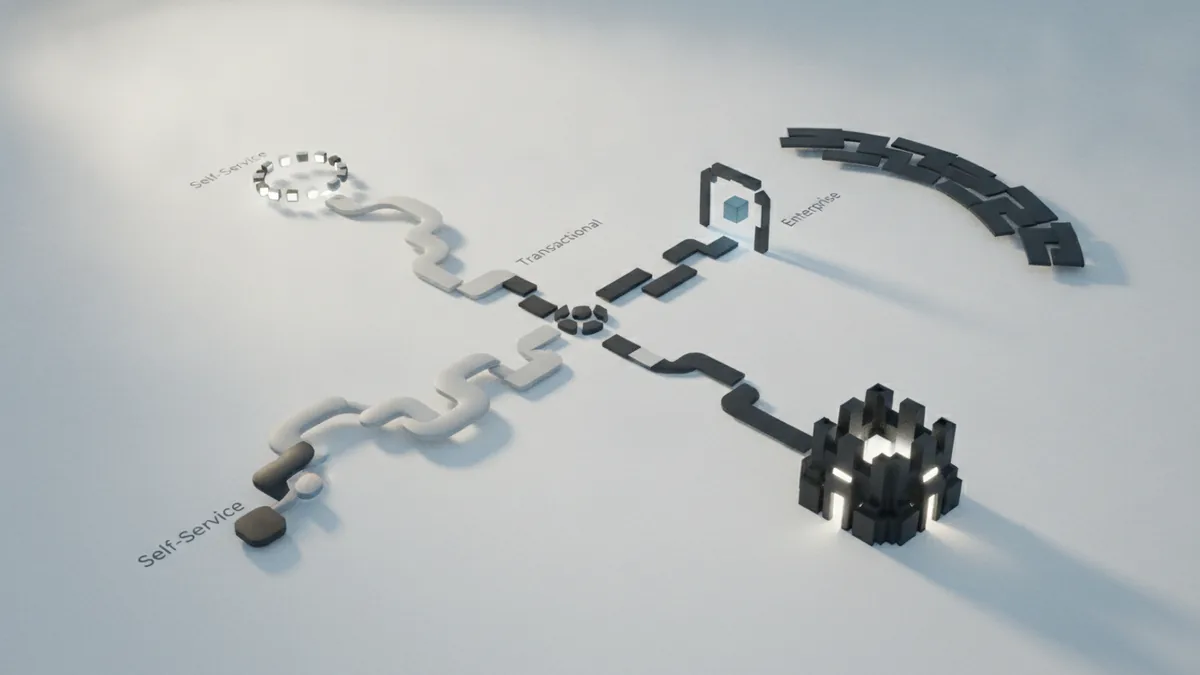
When people ask about business models of saas sales, they usually mean how much help the vendor provides. The three most common saas sales model types are self-service, transactional, and enterprise. Each one changes who you sell to, how you close, and how long deals last.
In self-service, buyers start with minimal interaction. The product’s UI and docs do most of the education. Conversion happens through onboarding, in-app prompts, and clear upgrade paths.
Transactional sales sit in the middle. Sales reps handle inbound leads and do short demos. Deals often close faster than enterprise, but they still rely on consultative selling.
Enterprise sales target larger orgs with many stakeholders. You will often run multiple demos, security reviews, and custom success planning. The saas sales process is longer because decision-making is slower.
| Model | Typical buyer | Sales interaction | Sales cycle length |
|---|---|---|---|
| Self-service | Individual users or small teams | Light touch; mostly product-led | Hours to days |
| Transactional | Mid-market teams | Short consultative demos | Weeks |
| Enterprise | Large companies | Multi-stakeholder cycles | Months |
Key Metrics in SaaS Sales
To manage a subscription model, you need saas sales metrics that reflect ongoing value. Revenue alone can mislead you if churn is rising. You should track acquisition, usage, and retention in one view.
CAC (Customer Acquisition Cost) tells you what it costs to win a customer. It includes marketing spend, sales effort, and any onboarding support tied to acquisition. If CAC rises while retention falls, growth will stall.
MRR (Monthly Recurring Revenue) is the baseline metric for monthly income. But MRR quality matters. Expansion revenue often comes from upsells once users see real value.
Churn rate measures how many customers leave, and it can be voluntary or involuntary. LTV (Customer Lifetime Value) estimates total value from a customer over time. In practice, you want LTV to exceed CAC with enough margin to fund growth.
- CAC: cost to acquire a customer
- MRR: predictable recurring revenue
- Churn rate: loss of customers or revenue
- LTV: expected total value per customer
If you are building a dashboard, include leading indicators too. For example, activation rate and time-to-first-value often predict later churn. Pair those with CRM tools data so reps can act quickly.
Challenges Faced in SaaS Selling
The biggest challenge in saas sales experience is selling a complex change. Buyers often compare multiple tools, then worry about switching costs. A single bad onboarding step can cause “pilot success, subscription failure.”
Another challenge is the longer sales cycle. Especially for expensive products, you may need multiple touchpoints and demos. You could also face procurement delays and security reviews that take weeks.
Teams also struggle with handoffs between sales and customer success management. If sales promises one outcome, but onboarding delivers something else, trust breaks. That mismatch shows up as churn and support tickets.
Finally, forecasting is harder than in traditional software sales. Subscription revenue grows and shrinks with usage. You must forecast renewals and expansions, not only new bookings.
A strong SaaS sales motion requires alignment across sales, onboarding, and support.
Tips for Success in SaaS Sales
If you want to know how to succeed in saas sales, focus on product depth first. Understand the customer workflow, the “jobs to be done,” and where users get stuck. Then you can tailor demos and build a clear path to first value.
Free trials and pilots are powerful when they are guided. A trial that gives access without goals can produce low conversion. Instead, set a success plan that includes a measurable outcome, like completing setup or importing real data.
Also, make upsell opportunities part of the sales conversation. Look for expansion triggers such as more seats, higher usage, or new team needs. These are easier to sell when customers already trust the product.
Here is a practical approach many teams use to improve performance. It ties sales funnel stages to what happens after signup, so adoption supports revenue.
- Map the buyer’s process: identify steps where your product creates value.
- Design a demo around outcomes: run a guided scenario with real inputs.
- Use onboarding milestones: define what success looks like in week one.
- Track activation: measure usage that predicts retention, not just logins.
- Plan renewals early: review usage and outcomes before renewal time.
If you are trying to break into SaaS sales, focus on consultative selling skills. Learn how to run discovery, document a solution, and manage stakeholder concerns. Your “SaaS experience” should be about helping users reach outcomes fast.
And if you are wondering what should the saas onboarding experience look like, keep it tight and measurable. Users should know what to do in the first session. Then they should hit a quick win, followed by deeper setup guided step by step.
Conclusion and Future Outlook
SaaS sales differ from traditional software sales because revenue depends on customer usage. That is why the saas sales process includes onboarding and ongoing support. The product experience, not just the pitch, drives renewals and minimizes churn.
As competition grows, buyers expect faster time-to-value. Sales teams that treat trials like guided pilots will usually convert more customers. They also reduce churn because users start with a success plan.
Looking ahead, automation will support parts of the sales funnel, especially lead routing and onboarding tasks. But consultative selling will stay central for complex B2B sales. The winners will be teams that combine good demos with strong customer success.
In short, the core question in SaaS sales is not “Did we close?” It is “Did the customer reach value quickly and keep using it?” If you can answer that consistently, growth becomes more predictable.
FAQ
- What are SaaS sales, in simple terms?
- SaaS sales are the activities used to sell subscription access to cloud software. Customers pay ongoing fees, so retention and onboarding directly affect revenue.
- What is the SaaS sales process like from lead to renewal?
- It usually starts with discovery, moves to demos and evaluation, then closes the subscription. Afterward, onboarding and customer success work determine renewal outcomes.
- What are the main business models of SaaS sales?
- Common saas sales models are self-service, transactional, and enterprise. They differ mainly in how much help buyers get and how long deals take.
- Which SaaS sales metrics should I watch first?
- Start with CAC, MRR, churn rate, and LTV. These show acquisition health, revenue trend, and whether customers stay long enough to pay back acquisition costs.
- Why is the SaaS sales cycle often longer than other sales?
- For high-priced products, multiple stakeholders must approve the purchase. Security reviews, procurement, and evaluation pilots add weeks or months.
- What should the SaaS onboarding experience look like?
- Users should get a clear first goal, guided setup, and a quick path to first value. Measure activation early so you can fix problems before churn starts.