What Is a Stateless API? Benefits, Limits, and Best Design
Learn what a stateless API is, how it works, why it scales, where it fits, and how it compares to stateful APIs.

What a stateless API is
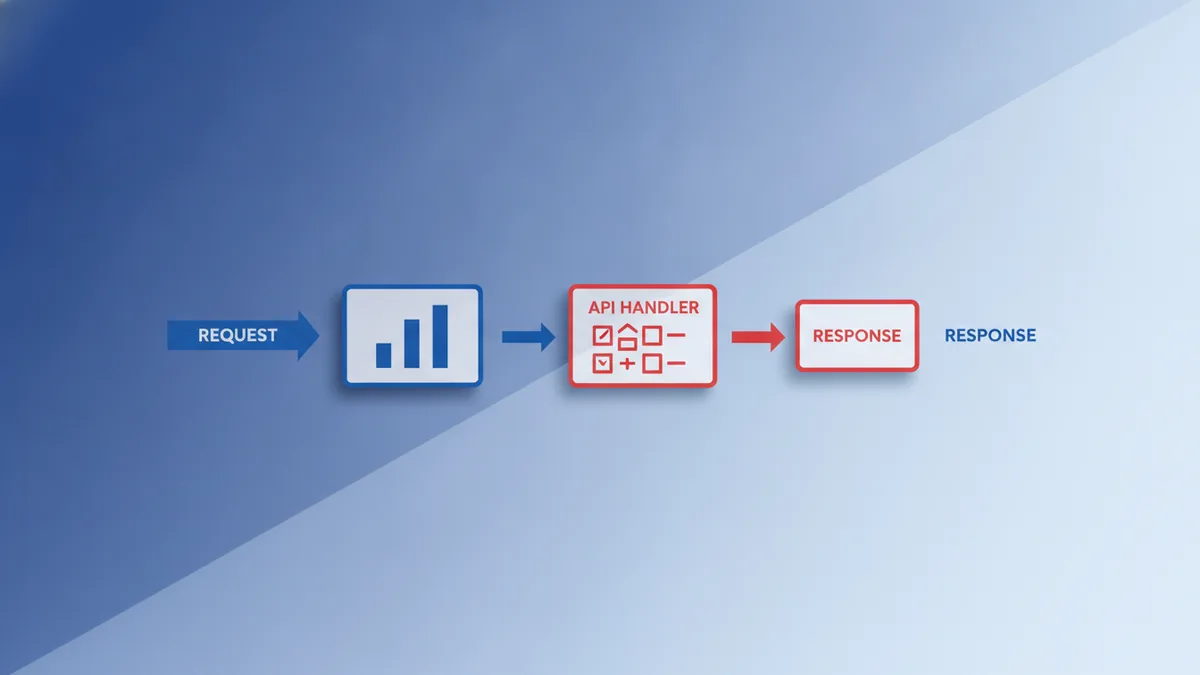
A stateless API does not keep client session data between requests. Each request stands alone. The server uses only what you send in that call.
If you ask, what is a stateless api, the answer is simple. The server does not “remember” you. So the client sends the needed info every time.
In a RESTful style, this is often described as “RESTful stateless API” behavior. REST principles focus on how you handle resources. Stateless handling is one part of that.
- Core rule: no server-side session memory
- Client duty: send needed request context each call
- Common fit: HTTP request and response

Key characteristics of stateless APIs
First, the server keeps no per-client state in memory. That means request A does not depend on request B. The call must work on its own.
Second, the request carries the context needed to act. This can be an ID in the URL. It can also be headers that prove who you are.
Third, the server behavior follows from the inputs. Same method, path, and key headers should yield the same result. That makes tests and bug checks easier.
| Aspect | Stateless API behavior |
|---|---|
| Session data | Not stored for each client |
| Request context | Sent on every request |
| Server focus | Check input and return a reply |
| Scaling | Many servers can handle calls |
Benefits of stateless APIs
A big plus is API scalability. You can add more app servers under a load balancer. None needs to “own” a user session.
Reliability can also rise. If a server restarts, it loses no session data. The client can resend the same kind of call with the right inputs.
Debugging is often faster. You can replay one bad call in a test run. You log the inputs and track them with a request id.
- Less memory: no per-client session store
- Better caching: safe replies can be saved
- Simple ops: fewer session tools to manage
- Faster tests: retry calls without flows
Caching works best for safe reads. For example, a GET by item id can be cached. Permissions must still be part of the decision.

Challenges of stateless APIs
The main cost shows up in long, multi-step flows. If the flow needs to keep its place, the server cannot do it. Each call is cut off from the last.
So you move more state into the client. Or you keep an “interaction record” in a data store. Either way, you may send bigger request bodies.
Authentication and approval need steady care. Since there is no stored session, each call must carry proof. Many teams use a token in headers on every request.
Caching can also be risky if you skip request context. If a reply varies by user, the cache key must vary too. Otherwise, one user can see another user’s data.
- List which data must be in every request.
- For large payloads, send ids, not full state.
- Make cache keys include user and role inputs.

Use cases for stateless APIs
Stateless APIs fit cloud apps well. In many cloud setups, you run many copies of one service. Any copy can handle any call.
They also fit distributed systems. In a microservices architecture, one service calls another. Each service should verify the call using what it receives.
Serverless architecture also matches this model. Serverless jobs may start and stop fast. Stateless handling avoids any hope that memory stays around.
In practice, stateless versus stateful APIs comes up in common endpoints. You can design reads and writes as single calls. You attach the order id or item id in each request.
- High traffic: easy load spread across many hosts
- Microservices: services stay less tied to each other
- Cloud and serverless: good for short-lived work
- RESTful stateless API: clear request/response flow
Comparison with stateful APIs
Stateless versus stateful APIs is about where state lives. A stateful API keeps client session state on the server. It uses that stored state on later calls.
A stateless API keeps no session state on the server. The client sends request context each time. That lets any server instance handle the call.
Scaling differs in a real way. Stateful setups often need sticky sessions. Or they need a shared session store that can bottleneck.
Here is a quick comparison.
| Category | Stateless API | Stateful API |
|---|---|---|
| Server memory | No per-client state | Often stores per-client state |
| How a call runs | Uses request inputs only | May rely on stored session |
| Scaling shape | Usually easy horizontal scale | Needs session plan |
| Read caching | Often easier for safe reads | Harder due to hidden session effects |
| Flow steps | Client must carry needed info | Server can track progress |
Neither model always wins. REST principles often favor stateless request work. Stateful APIs can still work when you need server-driven continuity.
Best practices for stateless API design
Start by naming what each call needs. That list often includes identity, tenant scope, and resource ids. If an endpoint cannot work from those inputs, rethink it.
Next, design request context and authentication methods. Use headers that the server can check each call. Keep token life short when you can.
Then, plan caching with care. Cache only when reply data depends on request inputs. If permissions change results, include those permission inputs in your cache key.
For multi-step work, do not store “in-memory” flow state. Store an interaction record in a data store. Each step can read that record by an id.
- Replay friendly: log enough info to rerun a call
- Clear ids: prefer item and order ids over hidden progress
- Same checks: validate inputs with one rules set
- Safe cache: avoid caching data that must stay private
Finally, write crisp client rules. Tell clients which headers and fields they must send. That lowers integration breaks and speeds up fixes.
Frequently asked questions
- What is a stateless API, in simple terms?
- A stateless API treats each request as independent. The server does not store per-client session state. The client includes the needed context on every call.
- How does a stateless API work with authentication?
- The server checks who you are for each call. You send the needed proof in that request, often in headers. Common options are tokens or API keys.
- What are the main benefits of stateless APIs?
- Stateless APIs make scaling easier across many servers. They can also reduce memory use on the server. Many responses can be cached more safely.
- What are the downsides of stateless APIs?
- Long, multi-step flows can be harder. The server cannot remember progress for you. The client must carry context or you must store flow state in a data store.
- How do stateless versus stateful APIs compare for scaling?
- Stateless APIs often avoid sticky sessions. Stateful APIs commonly need sticky sessions or a shared session store. Those can limit load spread and add bottlenecks.
- Where is a RESTful stateless API commonly used?
- You often see it in RESTful services and microservices. It fits distributed systems where any server instance can run calls. It also works well in cloud and serverless setups.
Related reading

How Can You Represent an API in a Diagram?
Map API calls, systems, and responses with diagrams that teams can use and update.

What Is Full Stack Software Development?
See how full stack developers build and connect the parts of modern software.

What Does API Access Mean for Your App or Business?
See how API access works, what it lets you do, and how to keep it safe.