Is Graphic Design Hard to Learn? Skills, Tools, Pathways
Graphic design blends creativity and technical craft. Learn what makes it hard, which skills matter, and how to grow from beginner to pro.

Understanding graphic design
Yes, is graphic design hard - but it depends on what you compare it to. It is not hard in the sense of “can’t do it.” It can be hard in the sense of “hard to do well.” A useful way to frame it is: graphic design is a craft, plus a communication skill. You will learn both, and they improve at different speeds.
Graphic design also overlaps with other fields like web design and product design, but it is not the same thing. Typography, layout, and visual hierarchy matter whether you design a poster or a landing page. Even when you use templates, you still make choices that affect readability and trust. Those choices take practice and feedback.
So, is graphic design a hard major? It can be, if you expect quick results without iteration. It becomes manageable when you treat design like a skill tree: fundamentals first, then depth. Many designers get better fast at specific tasks, like layout or icon work. Fewer get consistently great results without learning the deeper parts.
- Hard to master, not impossible to start
- Practice beats talent myths
- Design is communication, not decoration
Common misconceptions about difficulty
Many people assume design is easy because the entry barrier looks low. There are plenty of user-friendly tools, and you can make a nice-looking banner quickly. That speed creates a misleading impression of difficulty. A “good looking” outcome is not the same as a well-designed outcome.
The next misconception is that anyone can refine aesthetics by taste alone. Taste matters, but it is trainable. Designers build taste from patterns, references, and critique. Without studying design principles, you may repeat the same visual habits.
Also, perceptions of difficulty can swing from one extreme to another. The Dunning-Kruger effect can make some beginners overestimate how hard it is. Others may underestimate it because their first results look fine. In both cases, reality catches up once you work on real briefs with constraints.
- Templates can hide composition and hierarchy gaps
- Quick output can hide usability problems
- Early wins can mask missing fundamentals
Skill and knowledge requirements that actually matter
If you ask is graphic design hard to learn, the best answer is “you need a mix.” You need technical skills, plus creativity in design. Technical skills include layout control, typography basics, and correct file handling. Creativity includes idea generation and choosing a visual direction that fits the message.
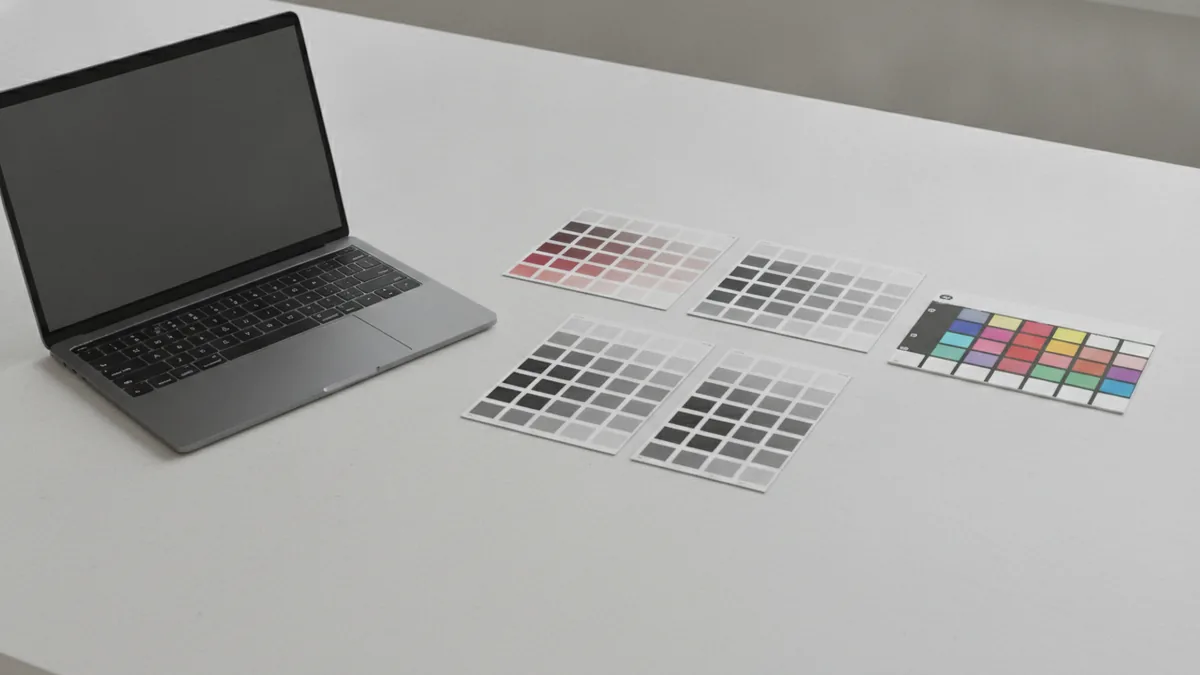
Color management is one area people ignore at first. If you export a design and it looks different on another screen, the issue is usually color handling. You also need to understand contrast, accessibility, and print versus screen differences. That knowledge protects you from “it looked right on my monitor” surprises.
Composition and hierarchy are another non-negotiable part. You must decide what the viewer sees first, second, and last. That decision uses spacing, alignment, grid thinking, and typography scales. A strong layout makes content easier to scan and harder to misread.
Finally, designers work with constraints. Projects have deadlines, brand rules, and changing feedback. That is why design can feel hard to get into - not because you lack creativity. It is because you must learn how to revise toward a goal that clients understand.
| Skill area | What you practice | What “good” looks like |
|---|---|---|
| Typography | Hierarchy, spacing, pairing | Easy reading and clear emphasis |
| Layout | Grids, alignment, flow | Clean structure and scanning |
| Color | Contrast, exporting, profile basics | Consistent output across devices |
| Visual thinking | Concepts and iteration | Ideas that match the brief |
Why creativity and critical thinking are the real differentiators
Creativity in design is not “draw cool stuff.” It is the skill of turning a message into a visual plan. You learn to ask what the audience needs to feel and do. Then you design a path that supports that goal. This is both creative and analytical.
Critical thinking shows up in critique and revision. You must evaluate your work with criteria, not just emotion. For example, if a poster feels “busy,” you can measure why: too many focal points, weak spacing, or unclear typography hierarchy. If a social ad fails to convert, you can inspect contrast, headline legibility, and the clarity of the offer.
This is also where the biggest “real challenge” lives. Clients often underestimate the complexity because they judge by the final picture. In reality, design needs client relationships and shared understanding. You must interpret a brief, then translate it into a visual direction that matches the client’s aesthetic sensibility.
- Good critique uses specific reasons
- Design choices connect to audience behavior
- Aesthetic sensibility improves with references
Tools and software proficiency
Tools matter, but they are rarely the main barrier. If you are wondering is graphic design hard to get into, the tool learning curve can feel steep at first. Menus, shortcuts, and export settings take time. Still, most of your early progress comes from mastering the fundamentals, not the fancy features.
You should learn basic workflows that reduce errors. Those workflows include setting up document units, using consistent type styles, and organizing layers. Exporting is also critical. One wrong setting can break how the design appears in print or on a website.
It helps to compare design tool skill to other disciplines. People ask is web design hard or even is web development hard because the tech feels complex. Design has its own complexity, too, even if the tools look “friendly.” Your job is to keep output reliable and readable.
- Learn shortcuts for typography and alignment
- Practice exporting for screen and print
- Build reusable styles to speed revisions
Pathways to learning graphic design
There are many valid entry paths, and you can pick one based on your schedule. A practical route is to start with fundamentals, then build small projects that end with a review. For example, redesign a familiar brand asset and explain your decisions. Another path is internships or freelance support roles, where you learn by seeing real constraints.
If you also ask is graphic design hard to learn, consider how you will measure progress. Use a repeatable rubric: typography clarity, hierarchy, spacing, and color consistency. Track what you improve after critique. That turns learning into a feedback loop rather than random practice.
For learners coming from development, it can also connect to web work. People ask is web design hard to learn because design touches layout, responsiveness, and assets. You can learn these parts gradually. Start with static comps, then build small components and compare how the design holds up in real screens.
One caution: do not chase everything at once. If you jump between poster design, icon design, UI design, and motion every week, you slow down your foundation. Pick one lane for a few months, then branch out once your layout instincts stabilize.
- Pick a 6- to 12-week focus area
- Use structured critique and revision
- Build a portfolio with explained decisions
Long-term development and growth
Graphic design improves with time, but it improves in specific ways. Early growth often looks like “better-looking work.” Later growth looks like faster iteration and more accurate decision-making. You start choosing layouts that fit the message on the first try more often. That speed comes from pattern knowledge and experience with critique.
Continuous learning is part of professional life. You should study new typography trends, but also test them against readability. You can read case studies that explain why a design direction worked. You can also learn from brand guidelines to understand constraint-driven design.
Experience also changes how you handle client needs. The real difficulty is not just aesthetics. It is interpreting what the client means, not only what they say. Great designers ask clarifying questions, then confirm the visual direction before building the final assets.
If you want a concise answer to “is graphic design hard,” here it is. It is easier to start than to excel. The long-term challenge is aligning goals, taste, and clarity under real constraints. That alignment is learned, and it gets better with every solid project.
| Stage | Common struggle | How to grow |
|---|---|---|
| Beginner | Inconsistent type and spacing | Drill grids and reusable styles |
| Intermediate | Weak concept behind the layout | Write a brief-to-design rationale |
| Advanced | Slow revisions with unclear direction | Improve discovery and feedback loops |
Frequently asked questions
- Is graphic design hard to learn for beginners?
- It is usually not hard to start. It becomes hard to learn only when you aim for consistent quality.
- Is graphic design a hard major compared with other fields?
- It can be demanding if you expect quick output. It gets easier when you focus on fundamentals and steady practice.
- Is graphic design hard to get into without experience?
- The tool part is learnable, but portfolios still require projects. Entry gets easier when you build work from real briefs and critique.
- How is graphic design difficulty different from web design?
- They share visual principles, but web work adds constraints like responsiveness. The mindset shifts from layout screens to working interfaces.
- Why do clients sometimes undervalue design work?
- Many see the final image only. They miss the research, iteration, and risk reduction behind the scenes.
- Does the Dunning-Kruger effect affect how people judge design difficulty?
- Yes. Beginners may overestimate or underestimate the work after seeing early results.
Related reading

How Do You Start a Career in Graphic Design?
Learn the skills, tools, and steps needed to build a design career.

Is Ecommerce Growing, and Why Does It Matter?
Learn what drives ecommerce growth and where online stores can stumble.

What Is a Headless API, and How Does It Power eCommerce?
See how headless APIs link flexible storefronts with eCommerce back ends.